
Your Garage Door Shouldn't Sound Like That
You press the button on your garage door opener, and instead of a smooth, quiet operation, you hear grinding, squealing, rattling, or a loud bang. If your garage door has started making unusual noises, it's trying to tell you something. Those sounds are almost always a sign that a component needs attention — and ignoring them can lead to bigger, more expensive problems down the road.
For homeowners in Clarksville, TN, where temperature swings between hot summers and cold winters put extra stress on garage door systems, noisy doors are one of the most common complaints we hear. The good news is that most causes are identifiable and fixable. Let's walk through the most common garage door noises, what they mean, and what you should do about each one.
Squealing or Screeching Sounds
A high-pitched squeal when your garage door moves is one of the most common — and most annoying — noises homeowners deal with. This sound usually points to one of two issues:
- Lack of lubrication: Metal rollers, hinges, and tracks need periodic lubrication to operate smoothly. Over time, the factory lubricant wears off and metal-on-metal contact creates that painful screeching sound.
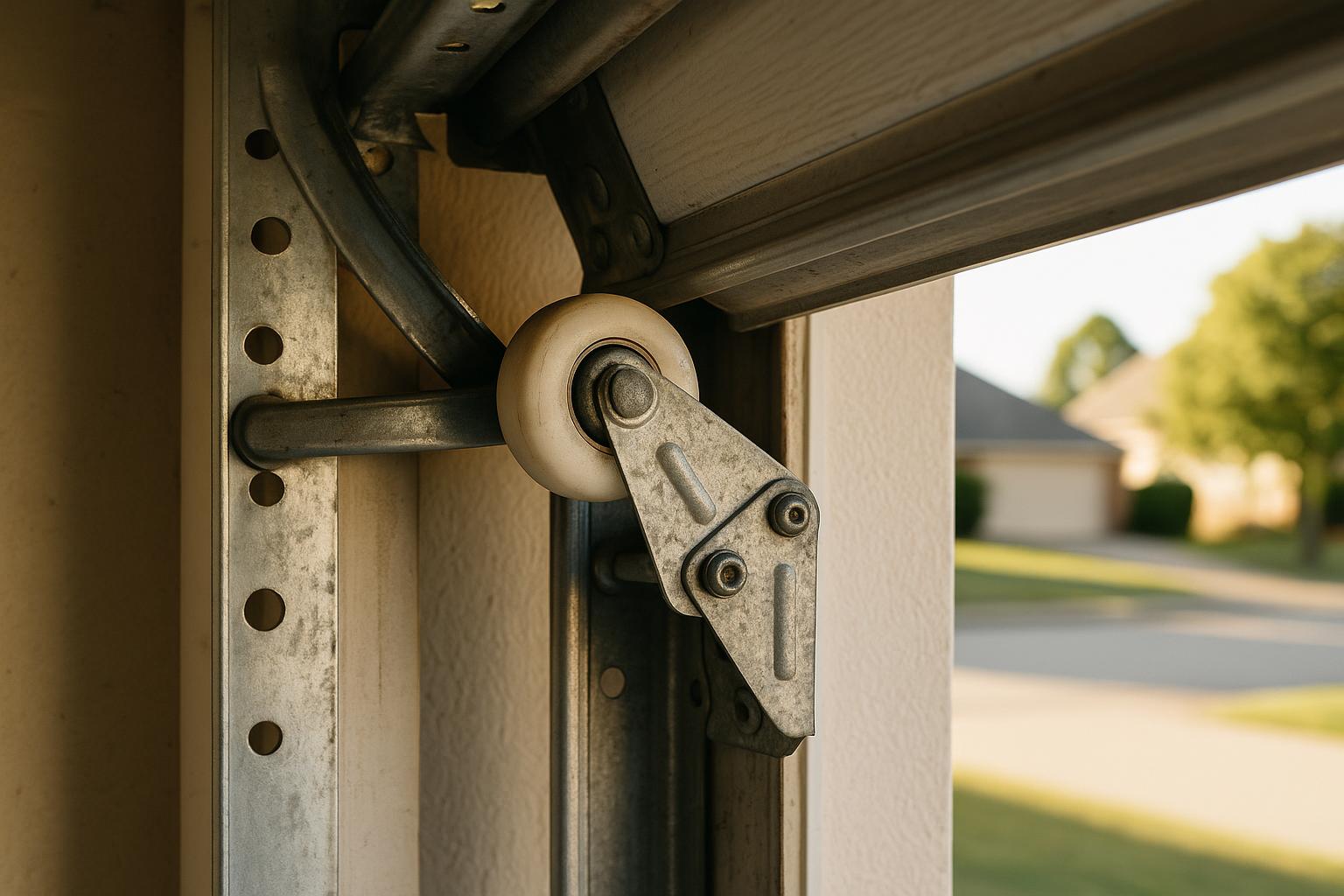
- Worn rollers: Steel rollers without nylon coatings are naturally louder, but even they shouldn't screech. If lubrication doesn't solve the problem, the rollers themselves may be worn out and need replacement.
A quick fix for squealing is to apply a garage door-specific lubricant (not WD-40, which is a degreaser, not a lubricant) to the rollers, hinges, and springs. If the noise persists after lubrication, it's time to have a technician inspect the rollers and other moving parts.
Grinding or Scraping Noises
Grinding sounds are more concerning than squealing because they typically indicate a mechanical problem rather than simple friction. Common causes include:
- Misaligned tracks: If the metal tracks that guide your door have shifted or bent, the rollers will grind against the track walls instead of gliding smoothly through them. You may also notice the door moving unevenly or getting stuck partway.
- Damaged rollers: Rollers that are cracked, chipped, or have flat spots will grind against the track as they rotate. This is especially common with older steel rollers.
- Opener gear issues: If the grinding seems to come from the motor unit on the ceiling rather than the door itself, the gears inside your garage door opener may be stripped or wearing down.
Grinding noises should be addressed promptly. A misaligned track can cause the door to jump off its tracks entirely, which is both a safety hazard and an expensive repair. If you hear grinding, we recommend having a professional take a look before the problem escalates.
Rattling and Vibrating
A rattling garage door often sounds worse than the actual problem. In many cases, the cause is relatively simple:
- Loose hardware: The nuts, bolts, and screws that hold your garage door system together can loosen over time due to the constant vibration of daily use. A socket wrench and a few minutes of tightening can often eliminate the rattle.
- Loose chain or belt: If you have a chain-drive opener, a loose chain will slap and rattle during operation. Belt-drive openers can also develop slack over time.
- Unsecured opener mounting: If the opener unit itself isn't firmly attached to the ceiling or support bracket, it can vibrate and create a rattling echo throughout your garage.
While rattling is usually the least serious noise on this list, it shouldn't be ignored indefinitely. Loose components can work themselves free and cause more significant damage or even fall.
Loud Banging or Popping
A sudden loud bang from your garage door is alarming, and for good reason. This sound often indicates:
- A broken torsion spring: When a torsion spring snaps, it releases a tremendous amount of stored energy and produces a sound that many Clarksville homeowners describe as sounding like a gunshot. If you hear this, do not attempt to operate the door. A broken spring makes the door extremely heavy and dangerous to move manually.
- Panel or section issues: Popping sounds during operation can indicate that a panel is warping, cracking, or pulling away from its hinges. This is especially common in older wooden garage doors that have been exposed to Tennessee's humidity for years.
A banging noise almost always requires professional repair. Spring replacement in particular should never be attempted as a DIY project — the tension involved can cause serious injury.
Ticking or Clicking Sounds
Rhythmic ticking or clicking as the door moves is usually related to:
- Something caught in the track: Small debris, a pebble, or even a buildup of dried grease can cause a clicking sound each time a roller passes over it.
- Worn sprockets in the opener: The drive sprocket in a chain-drive opener can develop worn teeth over time, creating a clicking sound with each rotation.
Inspect the tracks for visible debris first. If the tracks look clean, the issue is likely inside the opener mechanism and may need professional attention.
When to Call a Professional
Some garage door noises can be resolved with basic maintenance — lubrication, tightening hardware, and clearing debris from the tracks. But many noises signal problems that require trained technicians and specialized tools to fix safely. Here's a simple rule of thumb:
- Try DIY first: Lubrication, tightening loose bolts, and cleaning tracks.
- Call a professional: Grinding from tracks or openers, any banging or popping sounds, noises that persist after basic maintenance, or any situation where the door isn't moving smoothly.
At Clarksville Garage Door Pro, we diagnose noisy garage doors every week for homeowners across Clarksville, Fort Campbell, and the surrounding communities. We'll identify the exact source of the noise, explain your options, and get your door running quietly again — usually in a single visit.
Preventive Maintenance Keeps Things Quiet
The best way to avoid a noisy garage door is to stay ahead of wear and tear with regular maintenance. We recommend having your garage door system professionally inspected and serviced at least once a year. During a maintenance visit, a technician will lubricate all moving parts, tighten hardware, inspect springs and cables, test the balance of the door, and check the opener for signs of wear.
Regular maintenance not only keeps your garage door quiet but also extends the life of every component in the system. It's one of the most cost-effective investments you can make in your home.
Don't Ignore the Noise
A noisy garage door is more than just an annoyance — it's a warning sign. Whether it's a simple lubrication issue or a failing component that needs replacement, addressing the problem early saves you money and keeps your family safe. If your garage door has started making sounds that don't seem right, give Clarksville Garage Door Pro a call. We'll get to the bottom of it and have your door operating smoothly and quietly in no time.