
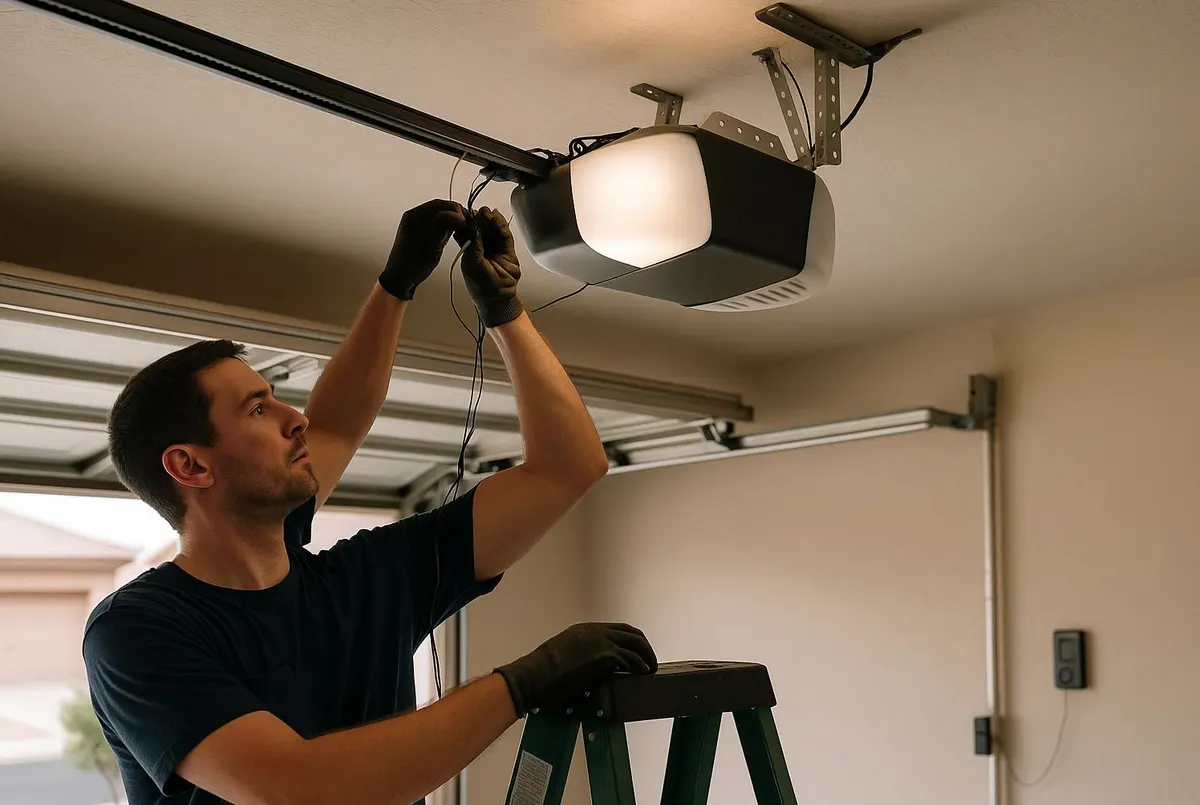
What a Technician Sees After a Windstorm
The call usually comes in the day after a line of storms rolls through: a homeowner opens the garage to find one panel bowed inward, a track pulled loose from the wall studs, or the whole door sitting crooked in its frame. Sometimes it's worse — the door came off the track entirely during a gust and now won't move at all. In almost every case, the damage traces back to the same thing: the garage door flexed under wind pressure it wasn't braced to handle, and once one section gives, the rest follows fast.
This time of year, with the remnants of Gulf hurricanes pushing wind and rain inland and fast-moving fall storm fronts common across Middle Tennessee, that kind of call becomes a lot more frequent. It's worth taking an afternoon before the next front to check your door, because by the time you hear the wind picking up, it's too late to do much more than hope.
Why the Garage Door Is Your Home's Weakest Wall
Every other exterior wall on a house is a solid, continuous structure. The garage door is not. It's a large panel of lightweight material — steel, aluminum, or wood composite — hung on a track and held shut by a handful of rollers, hinges, and a spring system that was never designed to resist a direct hit of wind pressure.
When high wind hits a closed garage door, it pushes against that entire surface at once. If the door isn't reinforced, it can bow, buckle, or get sucked outward hard enough to pop off the track. Once that happens, wind gets inside the garage, and the pressure has nowhere to go but up — against the roof decking from underneath. That's the scenario structural engineers worry about most in high-wind events: a failed garage door doesn't just mean a damaged door, it can be the first domino that leads to roof and structural damage.
The Storm Pattern This Region Actually Sees
Clarksville and the surrounding area get a mix that keeps garage doors working overtime: hot, humid summers that give way to heavy fall rain, occasional remnants of tropical systems that bring sustained wind well inland, and then ice storms later in the season that add weight and stress to hardware that's already been through a wet year. Add in the pine trees common around a lot of properties here, and you get another hazard — falling limbs and wind-blown debris that can dent panels or knock a door off alignment even without a direct structural failure.
The combination of humidity and rain also matters for hardware condition. Tracks, hinges, and fasteners that sit in a damp garage environment for months are more prone to rust and loosening, which means they're already weaker going into the exact season when wind loads are highest.
A Pre-Storm Inspection Checklist
Most of what makes a garage door perform well in a windstorm is routine maintenance that's been kept up with, not a special storm kit. Before the next round of fall weather:
- Check the track-to-wall connections. Look for lag bolts or brackets that have started to pull away from the framing. These take the brunt of the load when wind pushes on the door.
- Inspect rollers and hinges for rust. Humidity speeds up corrosion. A rusted roller can bind or snap under added stress.
- Tighten all visible hardware. Vibration from regular use, plus humidity swelling and shrinking wood framing, loosens bolts over time.
- Look at the weatherstripping along the bottom and sides. Cracked or missing seals let wind-driven rain into the garage, which adds weight to the door and moisture damage to stored items.
- Check for horizontal reinforcement struts on wider doors. Many double-wide doors need these braces to resist bowing in high wind, and some older installations never had them added.
- Test the opener's manual release. If a storm knocks out power, you want to know the emergency release actually works before you're standing in the driveway during a downpour trying to figure it out.
If You're Due for an Upgrade
Doors installed years ago often weren't rated for the wind loads we see now, especially with more frequent inland remnants of tropical storms. If your door flexes noticeably when a strong gust hits it, or if it's an older model without reinforcement, replacement with a wind-rated door is worth considering rather than continuing to patch a door that's reaching the end of its service life.
When to Call Clarksville Garage Door Pro
If your door is sagging, won't seal tight along the bottom, or you can see daylight around the edges when it's closed, that's wind and water getting a way in — call before the next front moves through, not after. Our garage door maintenance service covers the track alignment, hardware tightening, and weatherstripping checks that make the biggest difference in a wind event. If a storm has already done damage — a bent track, a door off its rollers, a panel that won't move — our emergency garage door service gets a technician out to secure the opening and get things functioning again, often the same day.
If you're in Clarksville, Fort Campbell, Oak Grove, Hopkinsville, Springfield, Ashland City, Pleasant View, or Sango and want your garage door checked before the next storm front rolls through, call Clarksville Garage Door Pro today to schedule a pre-storm inspection.