
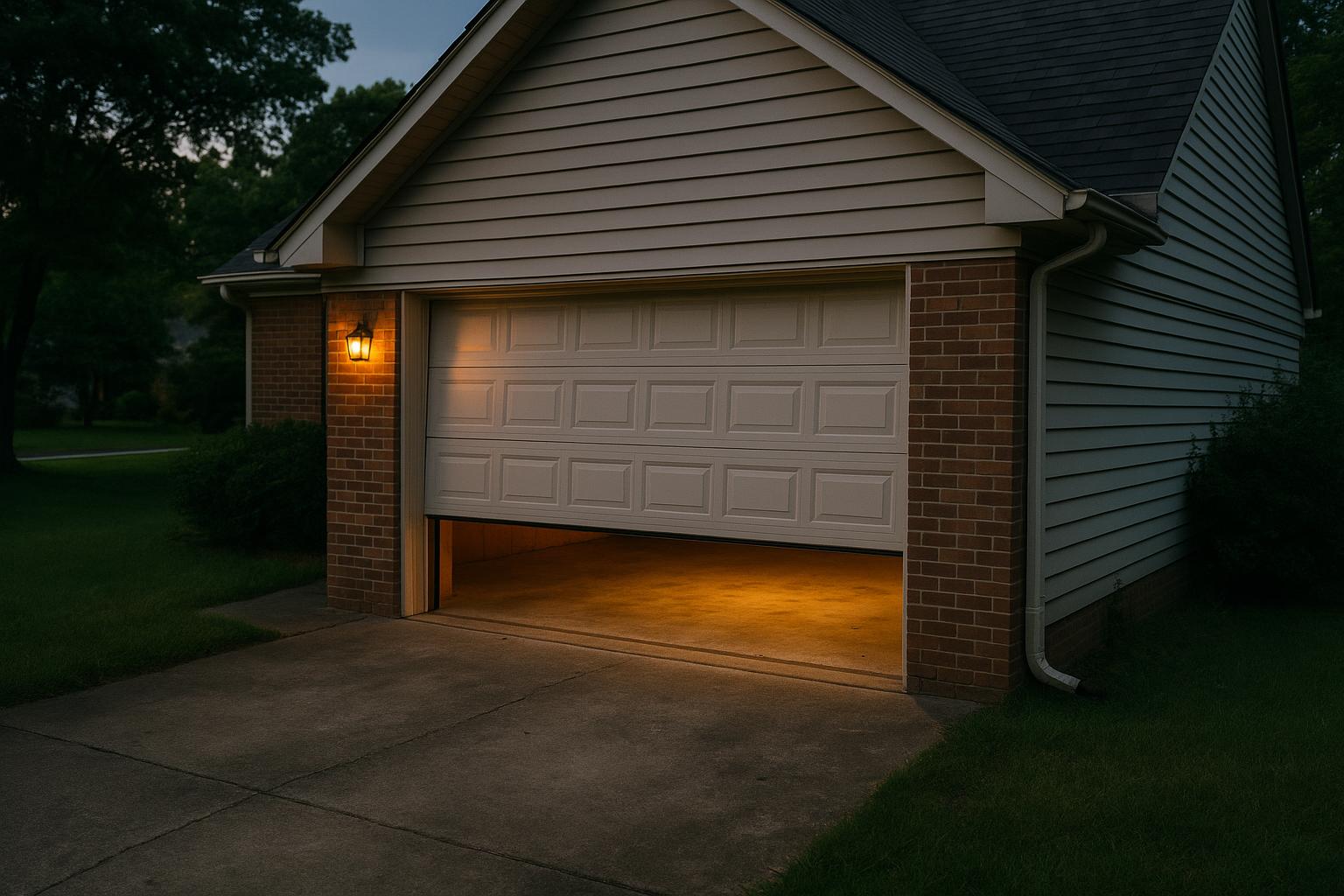
Your Garage Door Has a Mind of Its Own — Here's Why
You're sitting in your living room, and you hear it — the unmistakable sound of your garage door rolling open. Nobody pressed the button. Nobody's in the garage. It just... opened. If this has happened to you, you're not alone. Homeowners across Clarksville deal with phantom garage door openings more often than you'd think, and while it might feel like something out of a horror movie, the explanation is almost always mechanical or electrical.
A garage door that opens by itself isn't just unsettling — it's a genuine security concern. An open garage gives intruders easy access to your home, exposes your belongings to theft, and lets in weather, pests, and stray animals. Let's walk through the most common reasons this happens and what you can do to fix it.
1. Radio Frequency Interference
Your garage door opener communicates with your remote using a specific radio frequency. The problem is that other devices in the area — including your neighbor's garage door opener, police radios, or even nearby military communications from Fort Campbell — can sometimes operate on the same or a similar frequency.
When signals overlap, your opener may interpret a stray signal as a command to open. This was a much bigger issue with older, fixed-code remotes, but it can still happen with newer systems in areas with heavy radio traffic.
What You Can Do
- If your opener uses a fixed-code system, it's time to upgrade to a rolling-code opener. Rolling-code technology generates a new code every time you press the remote, making accidental activations nearly impossible.
- Check whether the issue happens at specific times of day, which can help identify an external signal source.
2. A Stuck or Damaged Wall Button
The hardwired wall button inside your garage is simple, but it can cause big problems when it malfunctions. If the button is stuck, has damaged wiring, or has a short circuit, it can send a continuous or intermittent signal to your opener — causing the door to open or close without anyone touching it.
What You Can Do
- Inspect the wall button for visible damage, debris, or a button that doesn't spring back properly after being pressed.
- Disconnect the wall button wires from the opener unit. If the phantom openings stop, you've found your culprit. Replace the button or have the wiring inspected by a professional.
3. Faulty Remote Controls
Sometimes the problem is literally sitting in your car's center console. A garage door remote with a stuck button, corroded contacts, or low batteries can send random signals to your opener. If the remote is buried under items in your car or a drawer, something may be pressing the button without you realizing it.
What You Can Do
- Remove the batteries from all your remotes temporarily. If the door stops opening on its own, test each remote one at a time to find the faulty one.
- Replace any remote that's physically damaged, especially if the button doesn't click cleanly.
4. Misaligned or Dirty Safety Sensors
Modern garage doors have photo-eye safety sensors near the bottom of the door tracks. These sensors are designed to prevent the door from closing on a person or object. While sensor issues more commonly prevent a door from closing, in some opener models, a sensor malfunction can trigger the door to reverse direction and open back up immediately after closing — making it seem like the door opened on its own.
What You Can Do
- Check that both sensors are aligned and that their indicator lights are steady, not blinking.
- Clean the sensor lenses with a soft cloth. Dust, cobwebs, and dirt are common problems, especially in Clarksville's humid summers.
- Make sure nothing is blocking the sensor beam — even a small leaf or piece of debris on the garage floor can trigger a reversal.
5. Wiring Problems
Over time, the wiring that connects your wall button, sensors, and opener can degrade. Exposed wires, frayed insulation, or wires that have been stapled too tightly can create short circuits. A short in the system can mimic a button press and activate the opener at random.
This is especially common in older homes around Clarksville and Ashland City where garage wiring may not have been updated in decades. Rodents chewing through wire insulation is another frequent cause.
What You Can Do
- Visually inspect all visible wiring for damage, bare spots, or signs of rodent activity.
- If you suspect a wiring issue, call a professional. Working with electrical wiring without proper knowledge can be dangerous and may void your opener's warranty.
6. Your Opener's Logic Board Is Failing
The logic board is essentially the brain of your garage door opener. Like any circuit board, it can degrade over time due to power surges, moisture, or simply age. A failing logic board can send erratic commands, including opening the door at random times.
Power surges are a real concern in our area, particularly during Tennessee's spring and summer storm seasons. If your garage door started acting strangely after a thunderstorm, the logic board may have sustained damage.
What You Can Do
- A surge protector on the outlet powering your opener can prevent future damage.
- If the logic board is the problem, a technician can often replace just the board rather than the entire opener unit — saving you money while solving the issue.
7. Someone Else Has Your Code
This sounds alarming, but it's usually innocent. If you bought your home from a previous owner, they may still have a remote programmed to your opener. Older fixed-code systems are also vulnerable to code duplication, where a neighbor's remote happens to match yours.
What You Can Do
- Reset your opener and reprogram all your remotes. Your owner's manual will have instructions, or a garage door technician can handle it quickly.
- If you've recently moved into a home in Clarksville or the surrounding area, reprogramming the garage door opener should be part of your move-in checklist — right alongside changing the locks.
When to Call a Professional
Some of these fixes are simple enough to handle on your own — cleaning sensors, checking remotes, or inspecting the wall button. But if the problem persists after basic troubleshooting, or if you suspect wiring or logic board issues, it's time to bring in a professional.
A phantom-opening garage door is a security vulnerability you don't want to ignore. Every hour your garage door is open when it shouldn't be is an hour your home is exposed.
At Clarksville Garage Door Pro, we diagnose and fix ghost-opening garage doors regularly. Whether you need a new opener with modern rolling-code technology, a wiring repair, or a logic board replacement, we'll track down the problem and make sure your door only opens when you tell it to. We serve homeowners across Clarksville, Fort Campbell, Springfield, Hopkinsville, and the surrounding communities.
If your garage door has been opening on its own, don't wait for it to happen at the worst possible time. Give us a call and let's get it sorted out.