
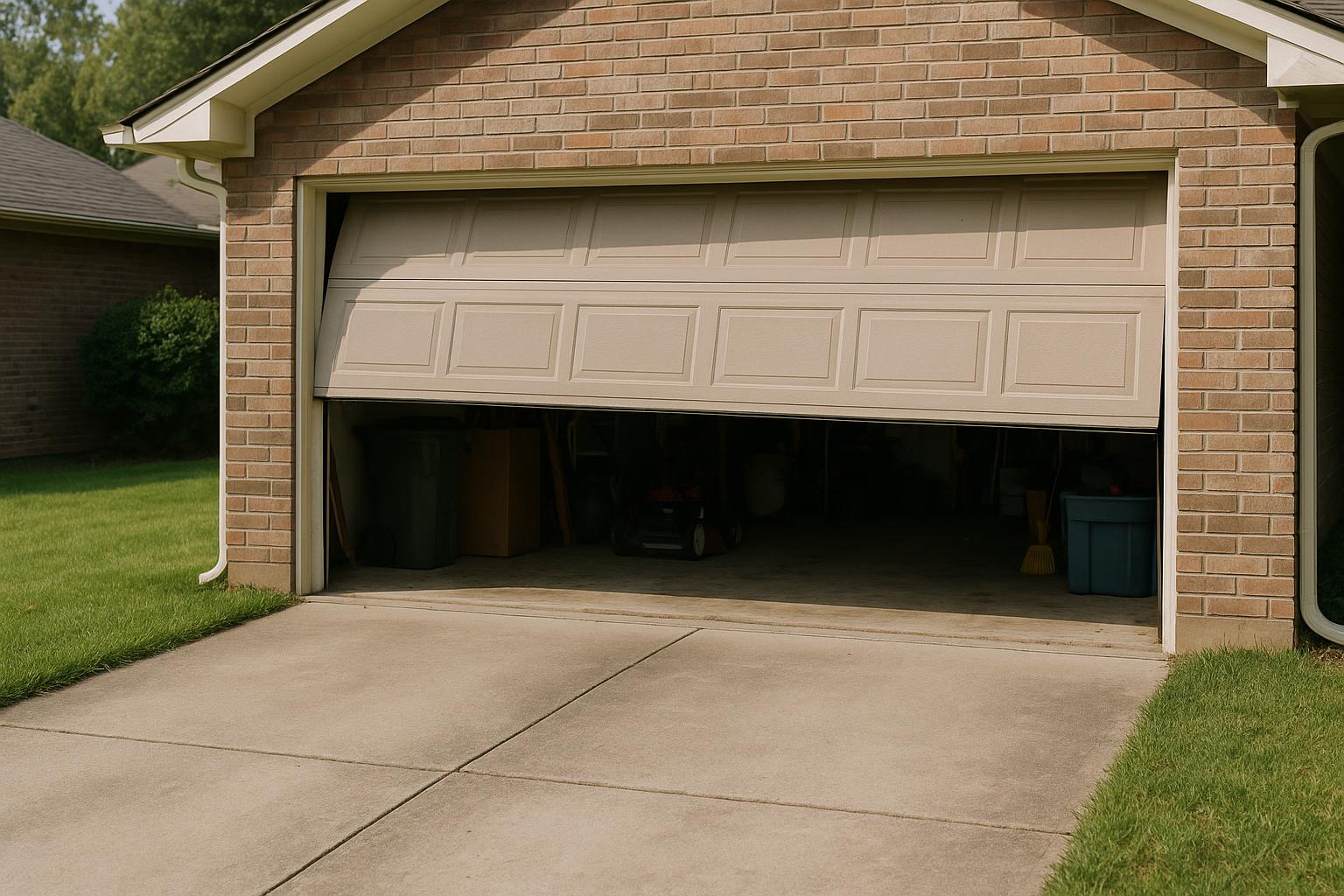
When Your Garage Door Refuses to Close
You press the button on your remote or wall panel, the motor hums, and your garage door starts moving — then stops, reverses, or simply refuses to budge. It's one of the most common garage door problems homeowners in Clarksville deal with, and it always seems to happen at the worst possible time.
A garage door that won't close isn't just an inconvenience. It's a security vulnerability for your home, an invitation for pests, and a problem that can get worse if you ignore it. The good news is that many of the causes are straightforward, and some you can even troubleshoot yourself before calling a professional.
Let's walk through the most common reasons your garage door won't close and what to do about each one.
1. Something Is Blocking the Safety Sensors
Every modern garage door has a pair of photoelectric safety sensors mounted near the bottom of the door tracks, one on each side. These sensors send an invisible beam across the opening, and if anything breaks that beam — a trash can, a bicycle, a leaf, even a cobweb — the door will refuse to close as a safety precaution.
This is by far the most common reason a garage door won't close, and it's usually the easiest to fix.
What to do:
- Check for any objects in the path of the door and move them out of the way.
- Look at the sensor lights. Most sensors have a small LED indicator. If one is off or blinking, the beam is misaligned or blocked.
- Wipe the sensor lenses with a clean, dry cloth. Dust, dirt, and spider webs can interfere with the beam.
- Make sure both sensors are pointed directly at each other. They can get bumped out of alignment, especially if you've been moving things around the garage.
2. The Safety Sensors Are Misaligned
Even a slight bump can knock one of your safety sensors out of alignment. When the two sensors can't communicate properly, your garage door opener interprets this as an obstruction and prevents the door from closing.
What to do:
- Check the LED lights on both sensors. Typically, one sensor has a green light (sending) and the other has an amber or red light (receiving). If the receiving sensor's light is flickering or off, it's likely misaligned.
- Loosen the wing nut or bracket holding the misaligned sensor and gently adjust it until the light becomes steady.
- Tighten the bracket back in place and test the door.
If you've tried adjusting the sensors and the problem keeps coming back, the wiring between the sensors and the opener may be damaged. That's a job best left to a professional.
3. The Remote or Wall Button Isn't Working Properly
Sometimes the issue isn't with the door at all — it's with the device you're using to control it. Dead batteries in a remote control are a surprisingly common culprit. Wall-mounted buttons can also wear out over time or develop loose wiring connections.
What to do:
- Replace the batteries in your remote control and try again.
- Test the wall-mounted button. If the door responds to the wall button but not the remote (or vice versa), you've narrowed down the problem.
- If neither the remote nor the wall button works, the issue is likely with the opener unit itself.
4. The Close-Limit Setting Needs Adjustment
Your garage door opener has limit settings that tell it how far the door should travel when opening and closing. If the close-limit setting is off, the opener may think the door has hit something before it actually reaches the ground, causing it to reverse.
This is common after a new opener installation or when temperature changes in Clarksville cause the metal tracks and hardware to expand or contract slightly between seasons.
What to do:
- Consult your opener's manual to locate the limit adjustment screws or settings. They're usually on the back or side of the motor unit.
- Make small adjustments to the close-limit setting, testing the door after each change.
- If you're not comfortable making this adjustment, a garage door technician can dial it in quickly.
5. The Tracks Are Damaged or Obstructed
Your garage door rides along a pair of metal tracks on either side of the opening. If those tracks are bent, dented, or have debris stuck in them, the door can bind or stop partway through its travel.
What to do:
- Visually inspect both tracks from top to bottom. Look for obvious bends, dents, or gaps where the track sections meet.
- Clear any debris — small rocks, leaves, or hardened grease buildup — from inside the tracks.
- Minor bends can sometimes be gently tapped back into shape with a rubber mallet, but significant damage usually requires track replacement.
Forcing a door to operate on damaged tracks can cause further damage to the door panels, rollers, and opener, so don't ignore this one.
6. Broken Cables or Worn Rollers
If your garage door closes partway and then gets stuck or makes grinding noises, the problem could be worn-out rollers or a broken lift cable. Rollers can crack, chip, or seize up over time, especially the cheaper plastic ones that come standard on many doors. Cables can fray and eventually snap.
Important: Do not attempt to repair or replace cables yourself. Garage door cables are under extreme tension and can cause serious injury if handled improperly. This is always a job for a trained technician.
7. The Opener's Logic Board Has Failed
If you've checked everything else and your garage door still won't close, the logic board inside your opener may have failed. Power surges — which aren't uncommon during Tennessee storm season — can fry the circuit board. Lightning strikes in the Clarksville and Fort Campbell area are a frequent cause of opener electronics failure.
What to do:
- Check if the opener responds to any commands at all. If the lights and motor show no signs of life, a power surge may be the culprit.
- A qualified technician can test the logic board and determine whether it can be replaced or if a new opener is the more cost-effective option.
When to Call a Professional
Some of the fixes above are simple enough for any homeowner to handle — clearing sensor obstructions, replacing remote batteries, or cleaning the sensor lenses. But if you've gone through the basics and your door still won't cooperate, it's time to bring in a professional.
Here are clear signs you should call for help:
- The door makes loud grinding, popping, or scraping noises.
- The door is visibly off-track or hanging at an angle.
- You notice frayed cables or broken hardware.
- The opener runs but the door doesn't move.
- You smell burning from the motor unit.
At Clarksville Garage Door Pro, we see these issues every week across Clarksville, Springfield, Ashland City, and the surrounding communities. Most problems can be diagnosed and repaired in a single visit, and we always explain what we find before we start any work.
Don't Let a Stuck Door Compromise Your Home
A garage door that won't close leaves your home exposed — to weather, to theft, and to unwanted critters. While some causes are minor and easy to fix on your own, others require professional tools and expertise to resolve safely.
If your garage door is giving you trouble, don't wait for a small problem to become a big one. Give us a call or schedule a service appointment, and we'll get your door working the way it should.